If you are even considering running a hospitality business, a management system that eases and facilitates the smooth running of operations is a must-have. There is real power in having an organized operating system that automates the daily menial tasks and the nitty-gritty logistics of your business.
I like the analogy of the duck swimming along a river. To an observer on the riverbank, it looks calm and composed, smoothly and effortlessly gliding through the still waters. But beneath the surface, its legs are efficiently and relentlessly paddling and steering in the direction of their choosing.
A hospitality business should run the same way. Smooth and seamless on the surface while being relentlessly efficient and high functioning behind the scenes. The outward impression of effortlessness whilst never seeming idle is such a joy to experience as a guest.
The tendency to get sucked into the current of daily operations is far too common and must be nipped in the bud before you’re drained of invaluable resources like your time, money, and energy.
This is why a Hotel Management System is a wonderful tool to minimize the frustrations of manual operations and manage your properties with an efficiency and sophistication that changes your business for the better.
Let us understand what a Hotel Management System is, what it does- its capabilities and why you need it. This way you can proceed to choose the one best suited for your business based on your business model and needs.
Table of Contents
What is a Hotel Management System?
A Hotel Management System is software that facilitates hotel reservation management and most administrative tasks- including front-desk operations, reservations, channel management, housekeeping schedules, check-in check-outs, financial transactions, etc. It combines multiple work environments in a single piece of software. It allows for the automation of repetitive tasks and eases general task distribution and management. This reduces the requirement for unnecessary human labor. Less people to manage and keep tabs on, less tendency for human error, less people working menial monotonous jobs.
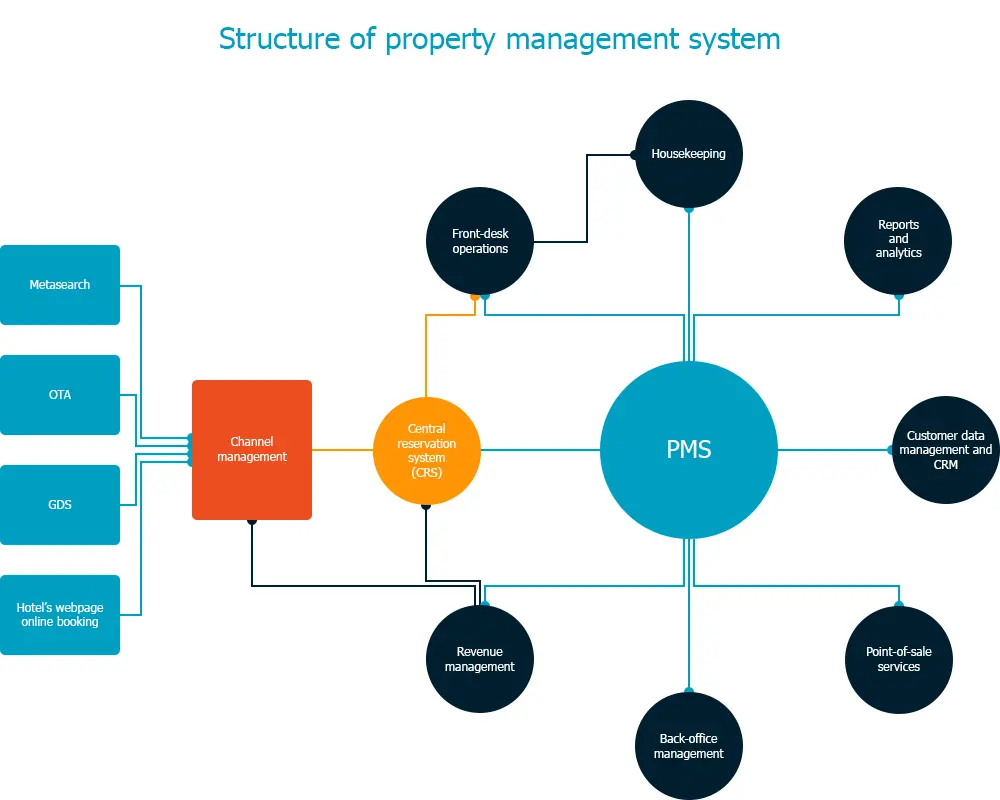
As a hotel owner, you’re looking to optimize operations and minimize work. You’re looking to collect and analyze data, and track room occupancy. This helps increase efficiency and optimize your labor force and strategy to maximize profits while also keeping guest satisfaction up.
Why do you need a Hotel Management System?
It is a data backed fact that your business will have significant improvements with the addition of a Property Management Software to aid with operations.
These are the results from the Data collected from the 2018 Hotel Industry Survey:
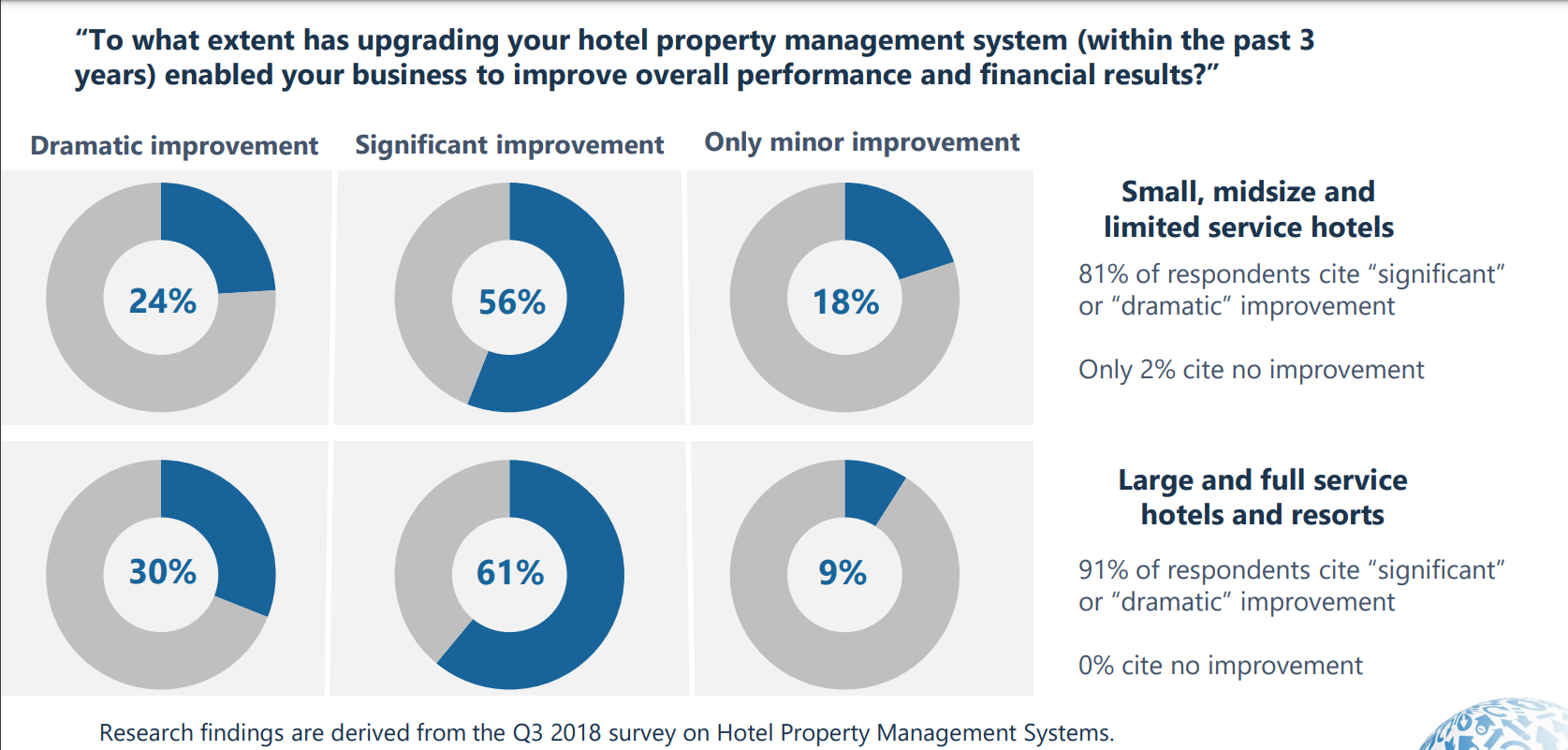
These Management Systems provide All-In-One Solutions for managing your business. The Ultimate goal is to maintain increasing profits and free up your time. Running any business- increasing efficiency and reducing human error is of utmost importance. And these Software solutions give you just that. If you are still asking yourself “Do I really need a Hotel Management System?” the answer is, “Yes, and you need it yesterday!”. Adopting new technology always involves initial friction but is well worth the trouble.
Types of Hotel Management Software
Hotel Management Software are either Cloud-based Systems or On-Premise Systems. These are primarily based on where your data are being stored and on where all your computation is taking place. Let us understand what each of the types entail and evaluate their pros and cons.
1. Cloud-based
Cloud Based systems are browser-based. The cloud comprises servers that are accessed from all over the Internet. Your Software and Databases run on these servers. Cloud servers are located in Data Centers across the globe. This eliminates the need for locally based servers, local databases, etc, and enables users to access files from any device.
Switching to Cloud Based Software removes IT costs. You are basically outsourcing your server maintenance and update to a cloud vendor. This is a relatively affordable and convenient solution that significantly reduces effort and manpower. All you need is internet connectivity. The pricing model is usually subscription-based and depends on the number of rooms you are managing.
(i) Centralized data for improved efficiency
(ii) Incredibly Convenient and Cost Effective
(iii) Easily accessible from any device
(iv) Fully Integrated and smooth running
(v) Automated Backup and Data retrieval
(vi) Regular Updates and Bug fixes
(vii) Customer Support
2. On-Premise Systems.
On-Premise Systems can be installed onto your desktop/PC and uses local servers on your computer. All your data is stored on your personal computer. You do not require internet connectivity but you do require significantly more on-property hardware. Maintenance requirements, technical requirements, and IT expertise are regularly needed. The major drawback here is the investment into maintenance of your local servers.
In my opinion, unless you’re running a hotel in the middle of nowhere with next to no internet connectivity- an on-premise system is just too much work. Outsourcing works much better. Don’t bother wasting valuable time, energy and resources on things that are easily outsourced. Your only prerequisite for a cloud-based system is internet connectivity. The benefits far outweigh the costs. Especially if you’re not running operations on an extremely large scale. With prices proportional to the scale of business operations, it makes complete practical sense to switch to the cloud. Don’t bother unnecessarily increasing your workload and complexity of operations

How to pick the Software Best Suited for You?
In today’s tech economy, there are going to be innumerable competitive options to choose from. Choosing your Software is the most arduous and painful step. Once you get past the first step, everything falls into place and starts to run smoothly.
While picking a Software, here are a few questions to consider that will make the decision process easier and more tangible:
- What operations does the software automate?
- How comfortable is the User Interface, is there a steep learning curve, and will my staff require extensive training to adapt to it?
- How credible is the software vendor, and is my data protected and secure?
- How good are the analyses and reports? How will this help boost revenue?
- What is the degree of customization offered?
- Does the Return on Investment justify the price?
- Is it open to third-party integrations?
I recommend creating Cost-Benefit lists as opposed to Pro-Con lists. I find they’re a better analysis tool and yield more tangible results. Make a list of your non-negotiables, then pick the system that is the most budget-friendly and checks most of the requirement boxes, and checks all of the non-negotiables.
Features a Hotel Management Software Provides
Hotel Management Software Systems have a set of essential features that are must-haves for any hotelier that is looking to improve guest experience and run operations more smoothly. These include automations, optimisation of operations, data collection and running analytics and analysis on your collected data.
1. Reservation Management
A Reservation Management system is the single source of truth for all bookings and reservations. This will enable guests to create secure online reservations for no additional fees. It will link up to your company website and automates the booking process. It will allow guests to choose the duration of stay, type of room, secure payments, and additional service add-ons.
2. Housekeeping and Room Management
Your software will optimize your Housekeeping operations by keeping track of room statuses and assigning staff to rooms that need service in the least amount of time. It labels rooms as clean/cleaning in progress/ dirty/ out-of-service and accordingly assigns tasks to the available staff so that everything is taken into account and everything runs smoothly on schedule.
3. Automation of Room Rates
Business ebbs and flows within the year. The Hotel industry operates in annual cycles. Holidays bring with them increases in guest bookings. As do weekends and tourist peak season. Occupancy rates fluctuate with schedules, the weather, the economy etc. Room rates should change in proportion to the demand to incentivise bookings in off-seasons and seem more lucrative to potential guests.
Similarly it would ramp up prices when demand increases during peak season. Your software can analyze the seasonality in your annual data and determine the changes in rate accordingly.
4. Intuitive Interface
The User Interface of your Software is what your staff interact with all day every day. While growing pains are natural and there is always friction while learning something new, it shouldn’t ever be more trouble than it’s worth. Overly complicated interfaces might appear fancier because of the extensive features but are usually a hindrance. Software with highly intuitive easy-to-understand layouts and functions allows for minimal employee training. A steep learning curve creates unnecessary hurdles that reduce efficiency.
5. Automated Backup
Data is everything. Your data is the difference between good service and great service. It is the difference between a personalized guest experience and standard run-of-the-mill hospitality. It is the difference between being prepared for predictable outcomes and being caught off guard and winging it. Backing up your data is essential. Automating your data backup allows for one less thing to worry about.
6. Data Analysis of Guest and Employee Data
Like I said- Data. Is. Everything. Analyzing data and drawing valuable insights allows you to stay ahead of the curve. It allows for prediction and forecasting of market trends. It helps analyze guest behavior. These insights can help exponentially enhance guest experience and will definitely increase the revenue your property generates.
7. Accessibility
Mobile Accessibility cannot be an afterthought. Mobile first design and compatibility is necessary. Software should allow for any time anywhere access on any device. Providing real-time access to information is an integral factor in overall guest satisfaction. Being able to virtually mitigate inconveniences and manage operations remotely is a game changer.
8. User Logs and Permissions
As a Business owner, your guests entrust you with valuable and sensitive data that shouldn’t be freely available to everyone. Your Software system should have in place all the permissions and access restrictions to secure sensitive data. Unauthorized access is dangerous and data can be misused and manipulated. Ensuring the security of your data is imperative.
9. Invoicing
Providing your guest with a comprehensive statement of the fees incurred, breaking down all expenditure with an itemized receipt is also very important. It increases guest satisfaction by keeping things transparent and honest. Your Software system will create an invoice from the extensive data it has collected. This is a highly beneficial function and serves an important purpose in a business.
10. Personalisation
With Guest Experience Management comes the possibility of Personalization. Gaining a deep understanding of individual guests and customizing the experience to suit their individual preferences. Guest Personalisation is all about data. A single consolidated view of all guest records (transactions, preferences, booking, payments, multi-property integration of guests’ data, etc.) is essential for amping up the customer experience the next time around. This makes the Guest feel special and appreciated and increases the likelihood of their return.
11. Third Party Integrations and Add-ons:
A Software system that integrates third party add-ons is such a boon to have. A smoothly integrated system will allow seamless switching between modules required. And none of your data will be lost in the process
12. Channel Manager
A channel manager is a software tool that allows you to connect your hotel to online booking sites, travel agents, etc. on top of your direct booking channel. It updates the room bookings and availability is real-time. This lets you promote your hotel rooms on multiple online channels while not having to worry about manually updating and adjusting your listings. A Channel Manager increases the capacity of a hotel to attract guests from multiple platforms and allows your business to easily deal with the hurdles that come with increased visibility.
12. Accounting Software
You get add-ons and modules that track all the expenses in the business from the revenue generated, to the money spent on inventory, monthly bills, employee salaries, etc. Having a one-stop solution for all your accounting makes tracking expenditure and profits so much less cumbersome.
13. Point-of-Sale Integration
A Point of Sale System is an upgrade to your regular old cash register. It is a computerized network of hardware and software that processes and records all transactions and payments. It optimizes and consolidates this data and provides insights for management and marketing. It is a phenomenal and impressive tool that can be used for analysis and decision-making. It often has Inventory Management Systems, Employee Management Systems and Customer Management systems all integrated into it with reports and analysis.
Evaluating your Property Requirements
Investing in the RIGHT Property Management system for you is important. The right system will help enhance revenue, simplify operations and exponentially ease your workload. The wrong system will prove to be much more work than it’s worth.
There are multiple factors that one should consider while choosing a Management system for your business. You need to ask yourself a list of questions before investing and committing to a particular model. Here are a few of them:
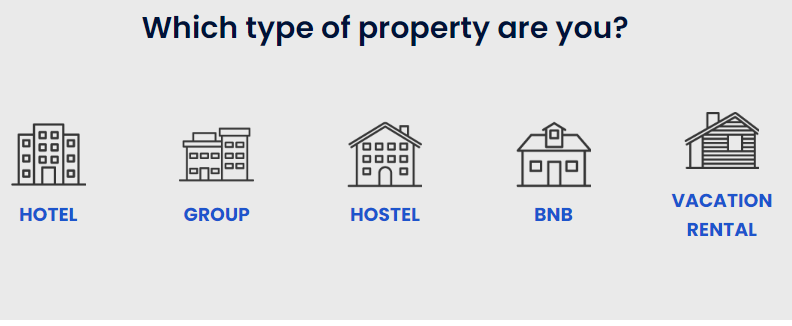
- What is my Property Type? What kind of Property Business am I running?
- What is the size of my Business? What is the scale at which I operate?
- What are my Business goals? What am I optimizing for?
- What are my non-negotiables? What features are absolutely necessary to my business?
- What is my budget?
Create a little Evaluation Checklist and compare the top contenders based on the available features. This is an example:
| EVALUATION FACTOR | WEIGHT | 1 | 2 | 3 |
|---|---|---|---|---|
| 1. Features and Functionality | ||||
| 2. Reservations / Online Bookings | ||||
| 3. Registration and Guest Accounting | ||||
| 4. Point of Sale | ||||
| 5. Guest Relationship Management | ||||
| 6. Group Sales/Multi Property Management | ||||
| 7. Regional Adaptability | ||||
| 8. Marketing and Sales | ||||
| 9. Data Analysis and Reports | ||||
| 10. Add-on Modules (Spa, Gym etc) | ||||
| 11. Channel Management | ||||
| 12. Revenue Management | ||||
| 13. Automated Backup/ Data Security | ||||
| 14. Data Integration | ||||
| 15. Ease of Use/ Intuitive Interface | ||||
| 16. Customization and Flexibility | ||||
| 17. Training/Support | ||||
| 18. Expected Cost and ROI |
Your Software System should necessarily be safe, secure and centralized. These are non-negotiables. Information should be properly stored and should be easily retrievable on demand whenever required. It should also only be accessible to the people with the right clearance as guests are entrusting you with sensitive personal information that cannot be treated recklessly.
Best Hotel Management Software Systems
1. Cloudbeds
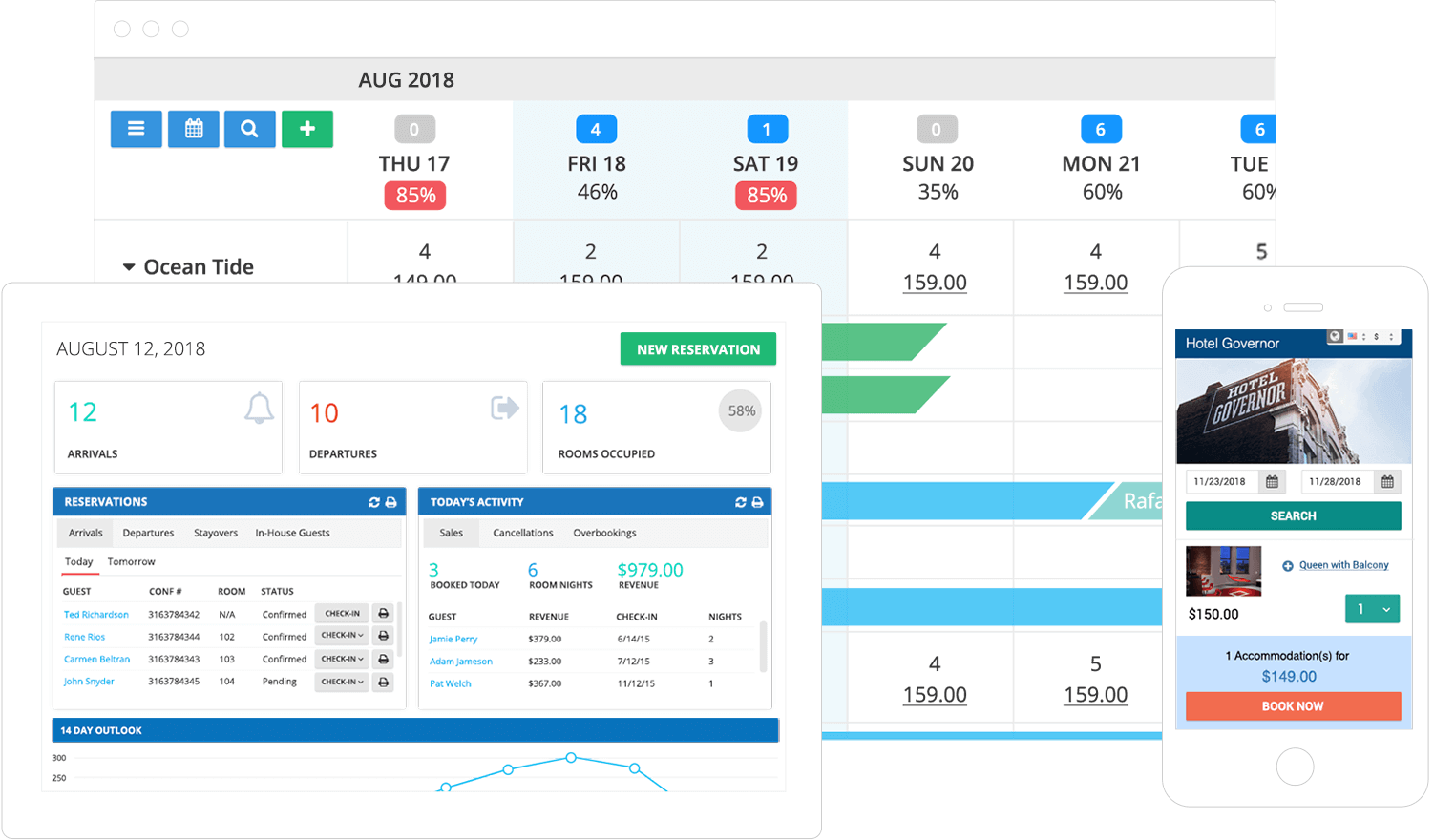
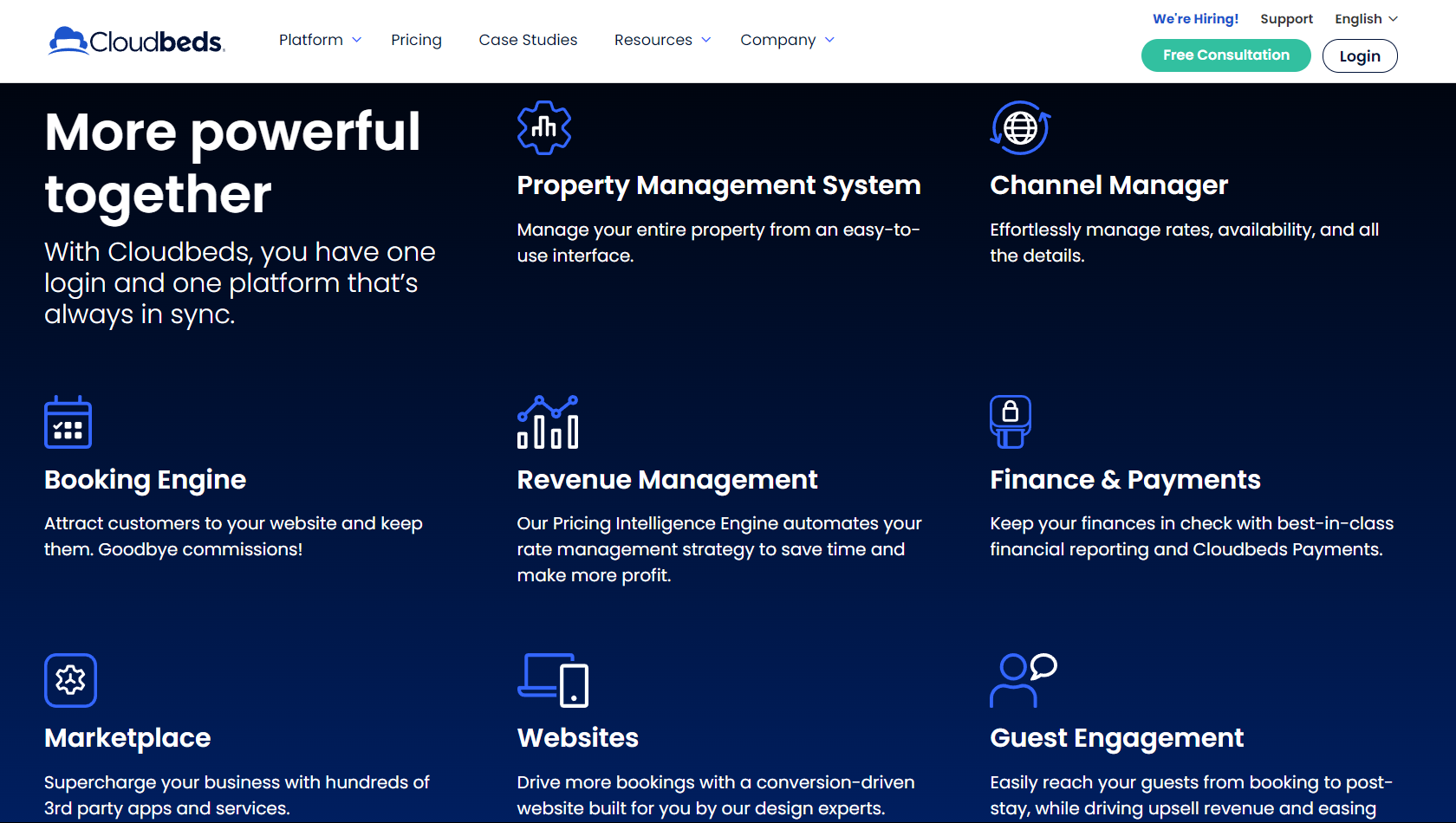
Cloudbeds is one of the fastest growing hospitality management software suites in the world right now. It provides tools to manage properties of all types and sizes. It is highly trusted internationally (147 countries) and is extremely user-friendly and comfortable to use. It ranks highly on most feature fronts. It comes with all the modules you need in the hospitality business but also allows for multiple third-party integrations. Customer Support is also reliable and sets it apart from its competitors. This is your all-in-one solution for all of your property needs.
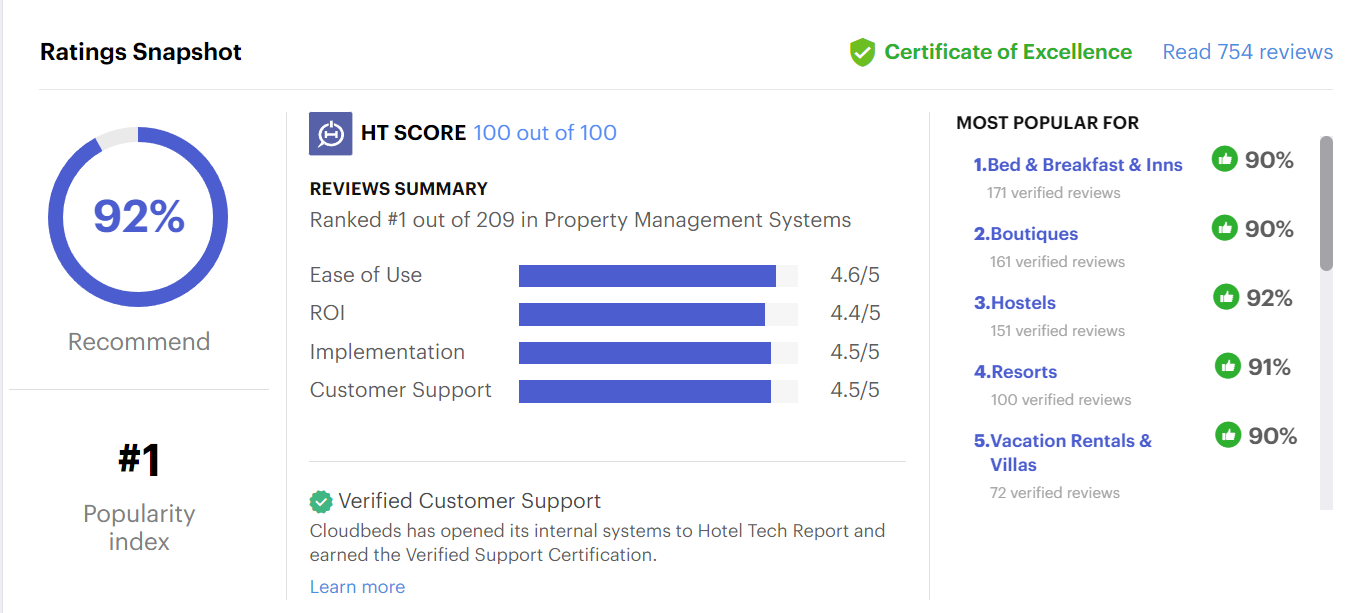
Below is the Rating Snapshot from Hotel Tech Report :
Website: https://www.cloudbeds.com/
Pricing: Depends on Property Type https://www.cloudbeds.com/pricing/
Rating: 4.6/5
Preferred Property Type: All Types
2. Mews

Founded by ex-hoteliers, Mews is a next-generation hospitality cloud for hotels, hostels, apartments and more. Mews distinguishes itself by providing the most number of third-party integrations as compared to its competitors. Mews provides businesses with exceptional training and has a high reputed user experience. Customer service is competent and efficient.
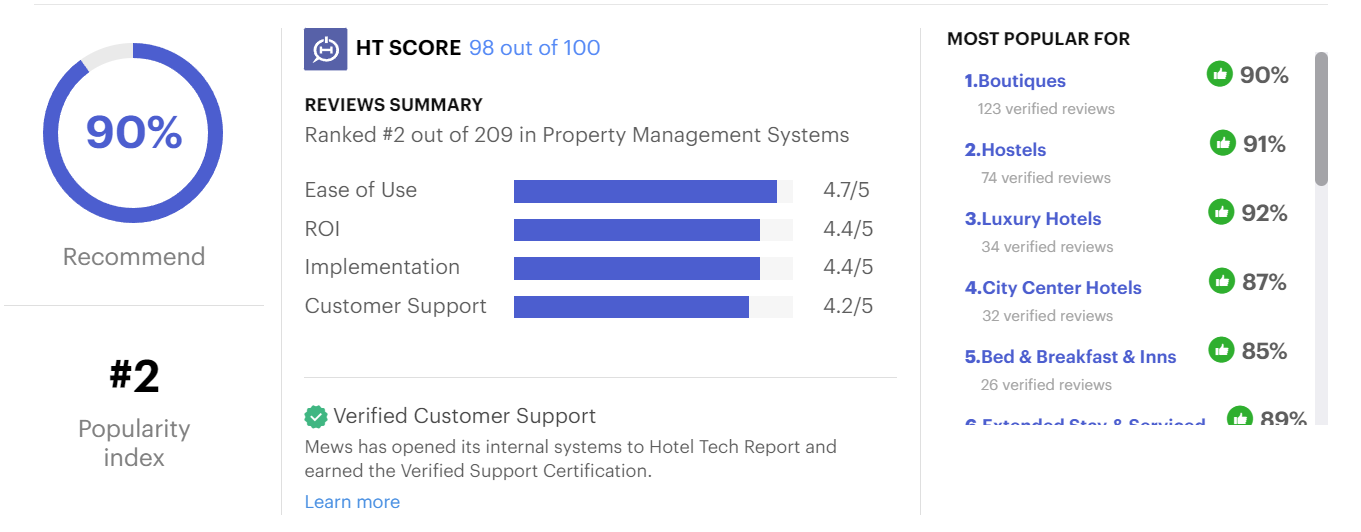
Website: https://www.mews.com/en
Pricing: ~$7-$10/room/month https://www.mews.com/en/pricing
Ratings:4.5/5
Preferred Property Type: Motels, Airport Hotels, Boutiques.
3. RoomRacoon
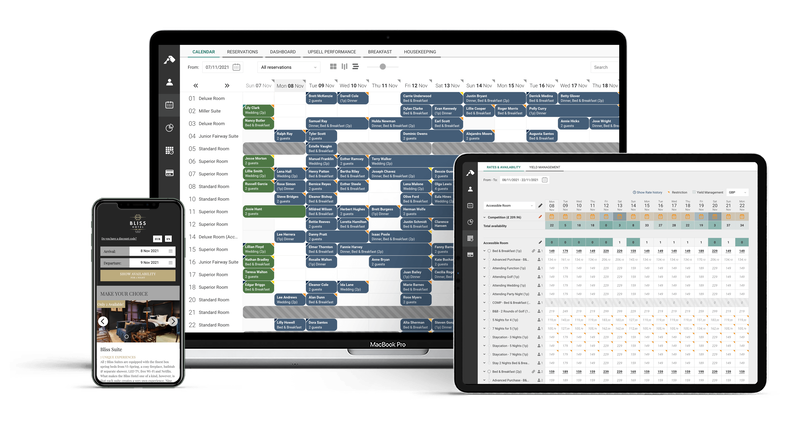
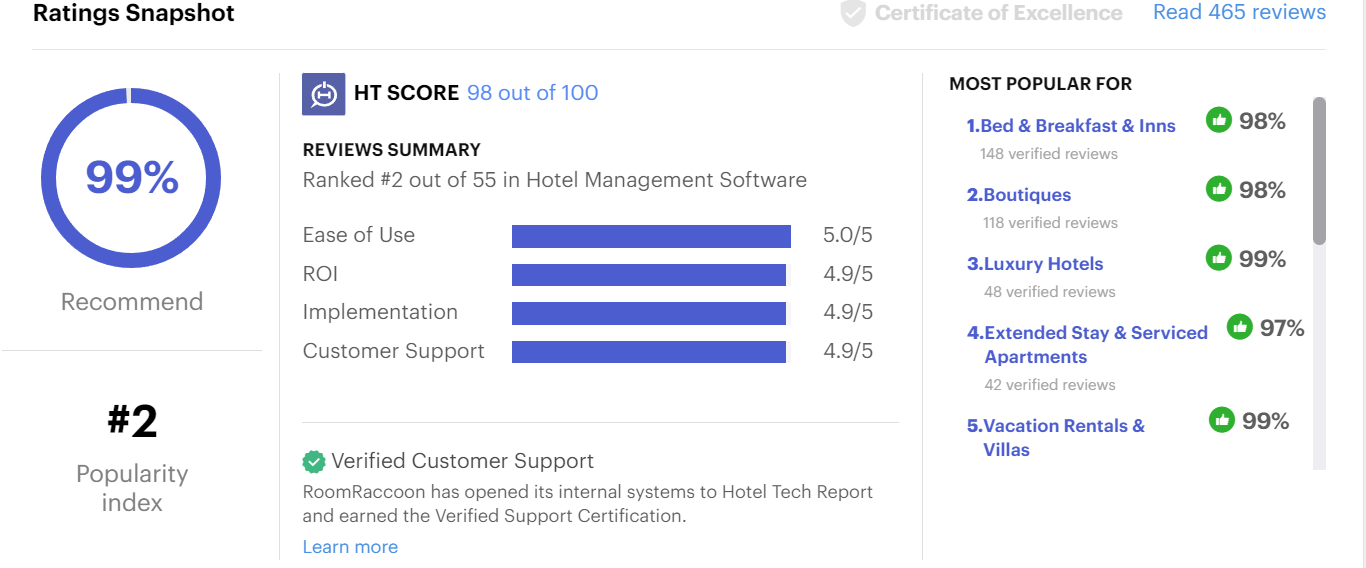
RoomRacoon is one of my personal favorites on this list. It is an all-in-one solution for all your property management needs. The best part about it is that it doesn’t need any third-party integrations, it just has every feature you could possibly need. It has a very comfortable interface and is known for its automated precision. RoomRacoon stands out from its competitors because of its incredible Revenue Management System that includes Revenue-Generating features that work to increase revenue at every customer checkpoint. And while this may seem trivial, I personally love the color scheme and friendly interface. This one has very few negative reviews.
Below is the Rating Snapshot from Hotel Tech Report :
Website: https://roomraccoon.us/
Pricing: ~$3-$6/room/month https://roomraccoon.us/pricing/
Ratings: 4.8/5
Preferred Property Type: All Types
4. WebRezPro
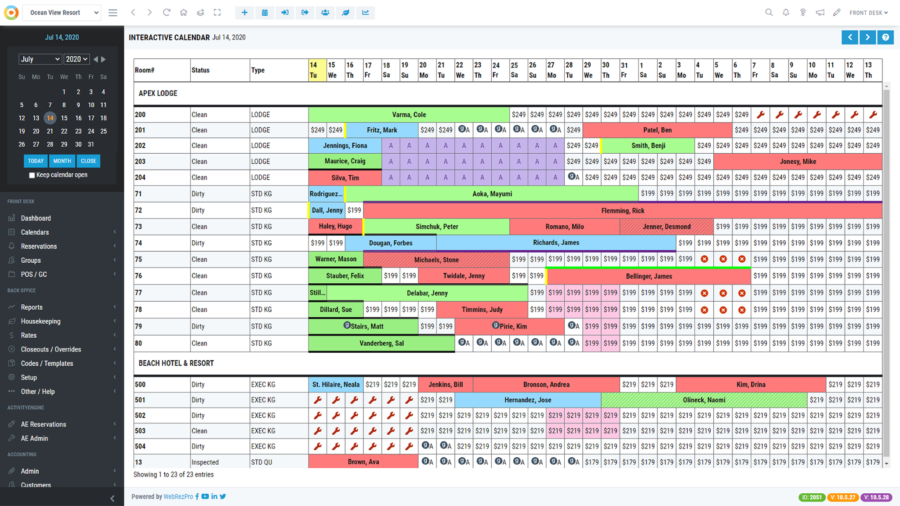
WebRezPro is a complete, integrated, automated and flexible cloud property management system designed to increase productivity and revenue for all types of accommodations. It is an easy-to-use solution that streamlines front desk and backoffice operations. It is very easy to use. Customer Support are very willing to help, regardless of scale of business. Customers swear that this software is responsible, efficient and helpful.
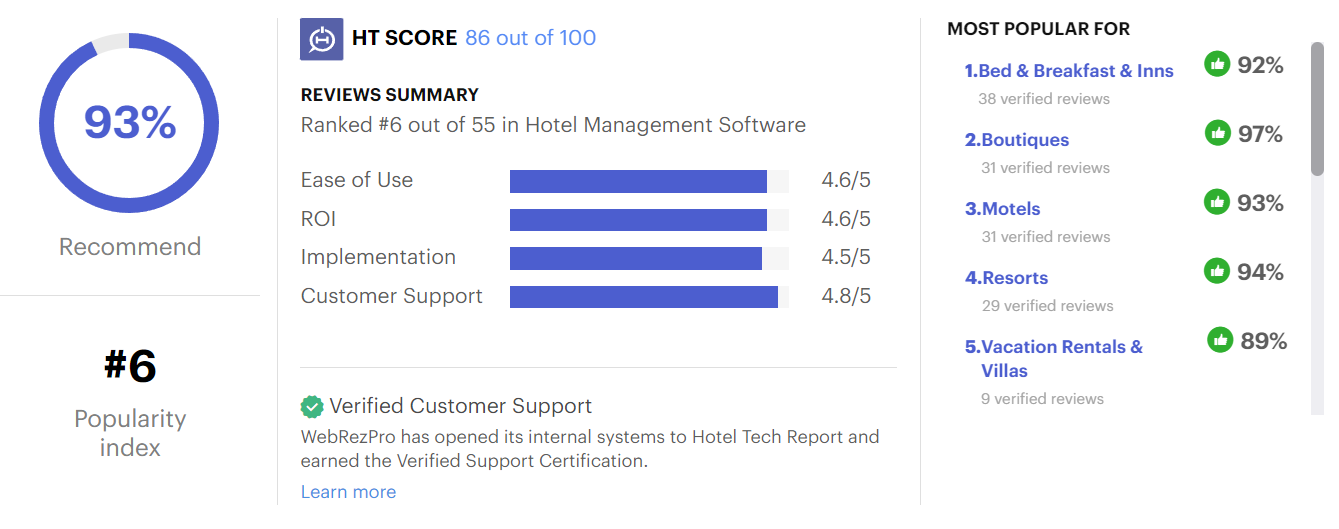
Website: https://webrezpro.com/
Pricing: ~$7-$10/room/month
Ratings: 4.6/5
Preferred Property Type: All Property Types.
5. Little Hotelier
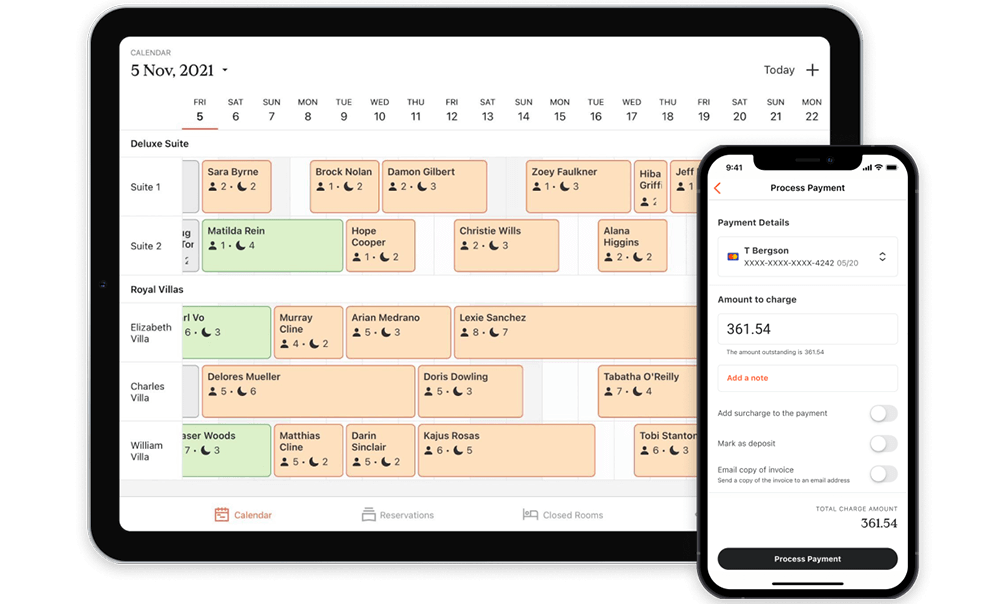
Little Hotelier is designed to meet the needs of small-scale property businesses. It boasts of (and delivers) a flexible, simple platform for your property needs. It is quick and easy to set up and has excellent customer service with 24/7 help whenever required just one click away.
Below is the Rating Snapshot from Hotel Tech Report :
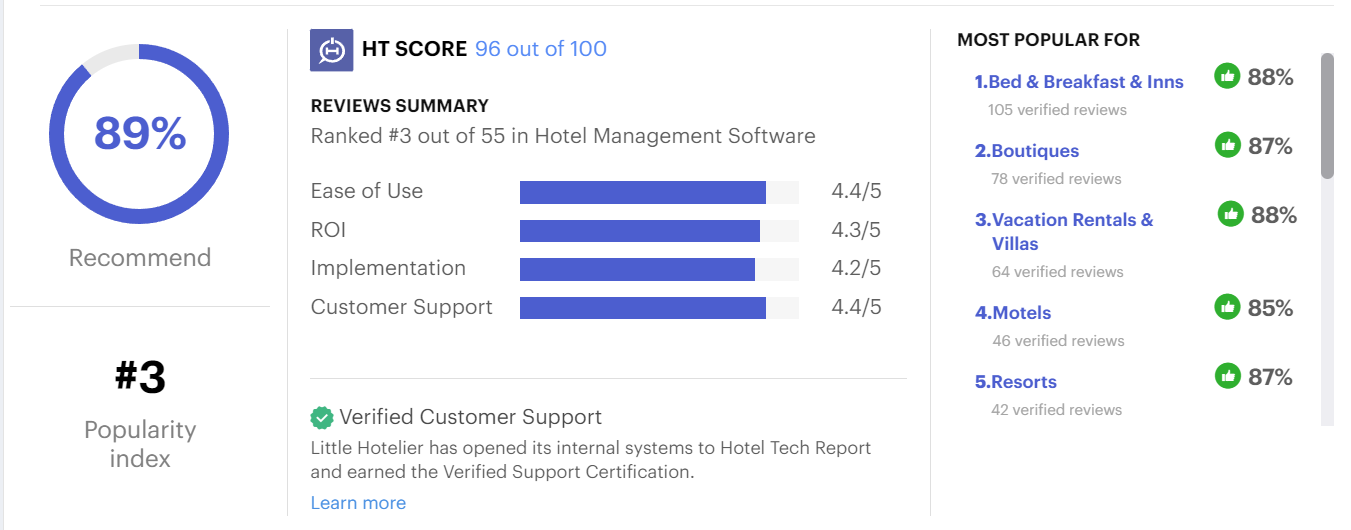
Website: https://www.littlehotelier.com/
Pricing: https://www.littlehotelier.com/pricing-plans/
Ratings: 4.2/5
Preferred Property Type: Small Scale Hotels
6. Protel

Protel is a cloud-native Propertty Management Solution that was ground-breaking. Two consecutive Olympics Villages were built on Protel. Protel comes with an app store that is accessible through the Protel Property Management System that has application based solutions for all your hospitality industry needs.
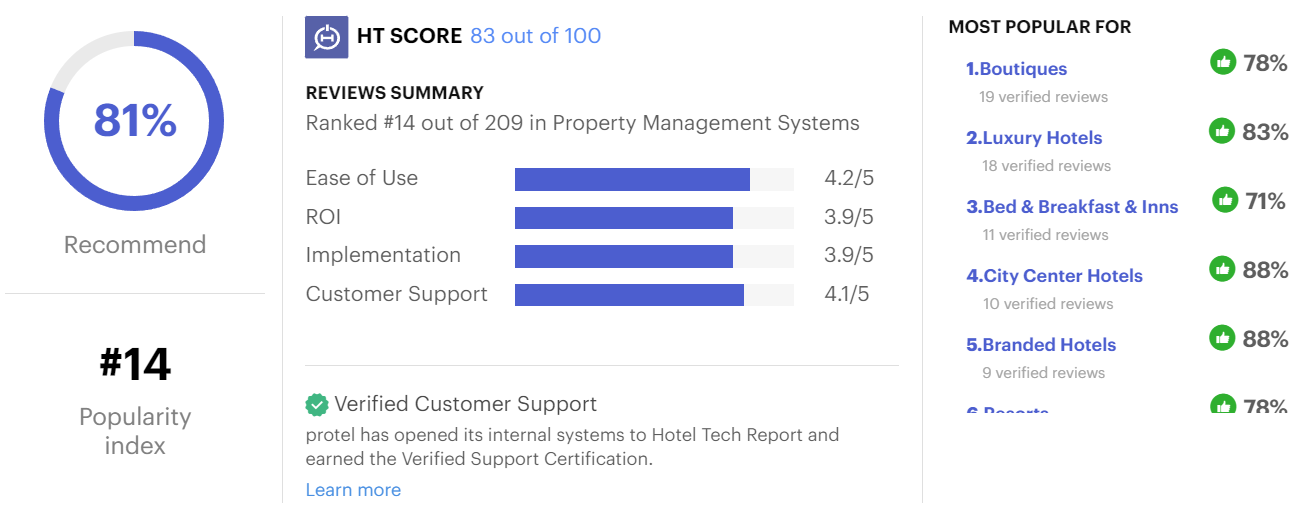
Website: https://www.protel.net/
Pricing: Available on demand https://www.protel.net/protel-air-pricing/
Ratings: 4/5
Preferred Property Type: Small and Medium sized Businesses
7. Oracle OPERA
OPERA is a secure, scalable cloud-based Property Management System that is best for large hotel chain and casinos. It appeals to a business that is bis and requires seamless integration and functioning of large-scale operations. It is a market leader in Point-of-Sale software. This is a time tested 4 decade old software system that can handle great complexity. This is a very ‘corporate’ friendly software. It provides rich data insights and encourages long term loyalty.
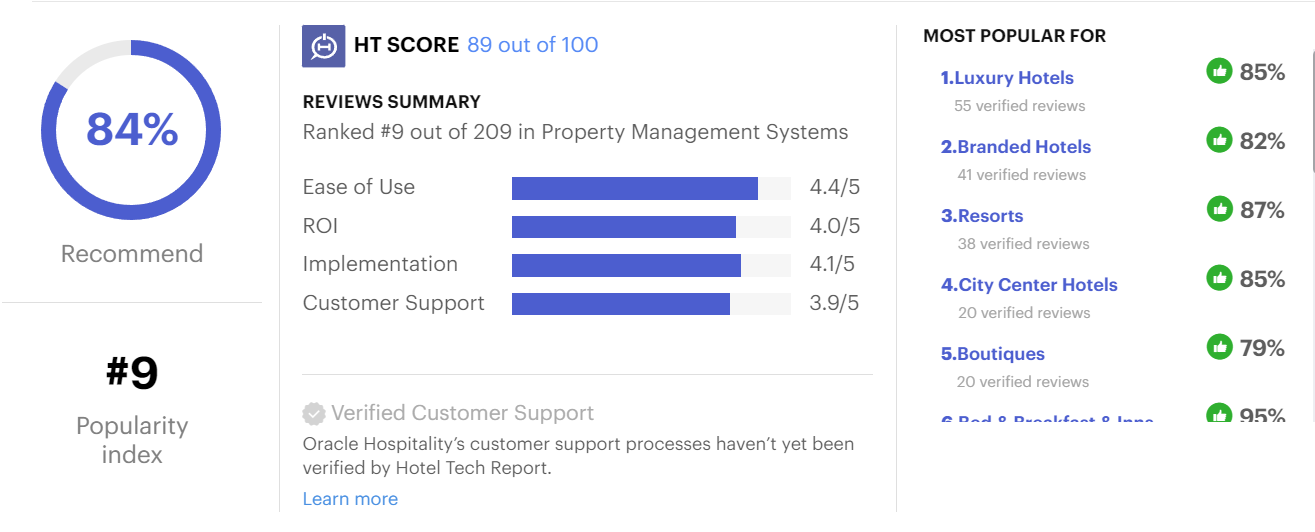
Website: www.oracle.com/Hospitality
Pricing: Available on Request
Ratings: 4/5
Preferred Property Type: Large Scale Hotels, Hostels, Casinos.
The Paradox of Choice is very real. If you think choosing a Management software is still too much work, or is too confusing and unnecessarily complicated. Just pick the most highly rated ones that suit your business model. These are well-rated and well reviewed. They are also most likely budget friendly. Market Competition corrects for that. Honestly, with the increase in efficiency and revenue your Property Management System will generate, the increase of efficiency it will allow, you more than compensate for the Monetary Investment required.
Conclusion
Adopting a good Hotel Management System is a strategic necessity that is an invaluable addition that assists in boosting the quality of your service as a Hotel Business. Honestly, don’t overcomplicate things. Pick something that you’re comfortable with, is easy to use, and doesn’t have too steep a learning curve. Most Software comes with free trial periods to let you test the waters. This is useful, but don’t get lost in the paradox of choice. The returns on your time investment are diminishing and if you dwell on it too long you’re never going to make a satisfactory choice. Most Hotel Management Software Systems have common features that are the absolute necessities. Spend a limited amount of time with a few contenders and then just jump in and stick with it.
Read Next:

Leave a Reply